Stop Teaching Math


Listen to the Dumbify Podcast on Spotify or Apple.
👋 Hey dumdums,
In 1957, a polished aluminum sphere the size of a beach ball detaches from a Soviet rocket over Kazakhstan, enters orbit, and starts to beep. It beeped for three weeks. Then its batteries died, it fell out of the sky, and it burned up in the atmosphere like a gym membership in February.
But those three weeks of beeping broke the American psyche. Congress passed the National Defense Education Act, poured over a billion dollars (in 1958 money) into redesigning education, and tapped a Yale math professor named Edward Begle to rewrite the curriculum. Every grade. Kindergarten through twelfth. That sequence of algebra, geometry, algebra II, precalculus, calculus? That's basically what your kid is sitting through right now. Same pipeline. Better fonts.
We're teaching Sputnik Math in 2025. And 28 years before Sputnik, a school superintendent in New Hampshire had already proved we were doing it wrong.
The Dumb Lens
We should stop teaching math to young children.
Not "make it more fun with apps." Not "integrate it with STEM projects." Just pull the plug on formal arithmetic for the first six years of school. Let kids read, talk, estimate, and reason their way through the world. Then, when their brains are actually ready for abstraction, teach them math in a fraction of the time.
This sounds like educational malpractice. It sounds like something you'd whisper at a school board meeting right before security escorted you out. But a superintendent in New Hampshire proved it worked. In 1929. His experimental second graders with zero math training outperformed ninth graders with nine years of it. And then a Soviet satellite beeped for three weeks and we spent the next seventy years building the exact system he warned us about.
"The early introduction of arithmetic had dulled and almost chloroformed the child's reasoning faculties."
— L.P. Benezet, 1935
Chloroformed. A school superintendent described teaching math to young kids the way you'd describe knocking someone unconscious. In a published paper. In the 1930s. And we just kept right on chloroforming.
The Man Who Deleted Math Class
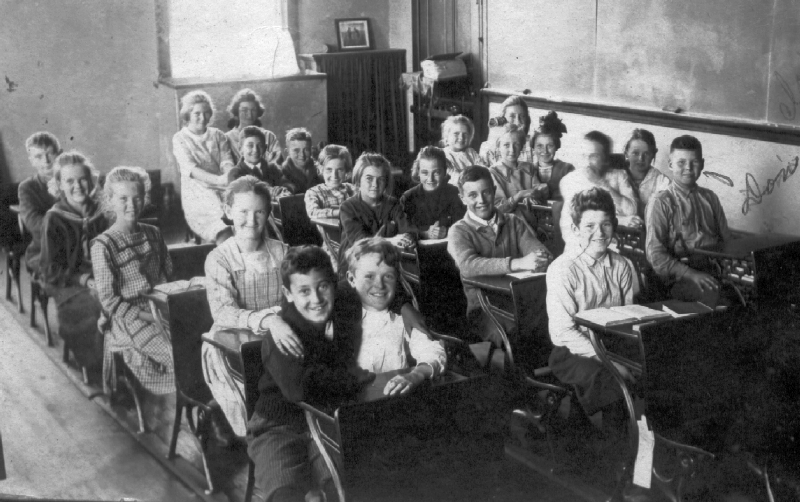
Louis Benezet was the superintendent of schools in Manchester, New Hampshire. Not a radical. A guy who went to conferences and talked about curriculum. But in 1929, he started visiting eighth-grade classrooms and just talking to students. What he found horrified him. Kids who'd had years of arithmetic drilled into them couldn't explain basic mathematical reasoning. They grabbed at formulas like life preservers and had no idea what any of it meant.
So he did something beautifully insane. He picked five classrooms in the poorest neighborhoods (he knew the rich parents would revolt) and told the teachers to stop teaching arithmetic entirely. No addition. No subtraction. No multiplication tables. Instead, kids would read, talk, estimate, and describe their thinking out loud.
By year's end, the kids with zero formal math reasoned their way to correct answers on story problems while the traditionally taught kids just grabbed at any numbers they saw and added them together. By sixth grade, after just one year of formal arithmetic, the experimental kids had caught up on computation and were still miles ahead on reasoning.
Benezet published three papers in the Journal of the National Education Association. Then principals pushed back, parents got nervous, the experiment got quietly shelved, and a beach ball beeped in orbit and we redesigned everything in the opposite direction.
Estonia Chose Computers Over Long Division
Conrad Wolfram (the brother of the guy who created Wolfram|Alpha Mathematica) gave an Oxford TED talk in 2010 arguing that school spends 80% of math time on calculating by hand, the one step computers do infinitely better than humans, while skipping the steps that actually require judgment. His analogy was perfect. Taking a math exam with hand calculations is like taking a driving test with a horse and cart.
He launched a project called Computer-Based Math and found exactly one country brave enough to try it. Estonia. Population three times smaller than Brooklyn. They built a new curriculum around computational thinking, started teaching coding in primary school through a program called ProgeTiger, and gave schools enormous autonomy. Estonia now ranks first in Europe in PISA math scores. Ahead of Finland. With fewer hours in class.
Nobody Uses This Stuff (The Numbers Say So)
A Freakonomics survey of 900 podcast listeners (self-selected nerds, mind you) found less than 12% used any algebra, trigonometry, or calculus daily. Only 2% used integrals or derivatives. But 66% used spreadsheets every day. We don't teach spreadsheets. Meanwhile, sociologist Michael Handel at Northeastern surveyed 2,300 workers and found the vast majority needed nothing beyond basic arithmetic on the job. And a 2010 Department of Education study found that failing algebra is the single strongest academic predictor that a student will drop out of high school entirely.
We built a system that teaches almost everyone a skill almost nobody uses, that most people can't apply even after learning it, and that functions as the primary mechanism for kicking people out of education. That's not a curriculum. That's a hazing ritual.
What Does Science Have to Say?
Cognitive scientists have a name for why your math education evaporates the moment you leave the classroom. It's called the transfer problem. You learn a skill in one context, try to apply it in another, and your brain just shrugs. A student who can solve algebraic equations in a textbook genuinely cannot recognize that comparing unit prices at a grocery store is the same math. The classroom formatting, the teacher's nod, the chapter title. Those were doing the heavy lifting, not the algebra.
Handel's STAMP survey confirmed this at scale. Workers who technically "knew" higher math couldn't deploy it in unstructured real-world situations. And as Andrew Hacker argued in his infamous New York Times piece, drilling procedures doesn't just fail to build number sense. It can actively suppress it. Exactly what Benezet found 97 years ago when his math-free kids thought circles around the ones who'd been calculating since kindergarten.
Dumb Word of the Day
Abacist (AB-uh-sist) n. A person who performs calculations using an abacus.
In the late 1400s, Europe had its own math wars. Abacists versus algorists. Bead-pushers versus pencil-pushers. There were public dueling-calculation competitions. The algorists won. Then five hundred years later, the algorists became the new abacists, defending pen-and-paper methods against calculators and computers. Same panic, different century.
Let's use it in a sentence: "When my nephew asked Siri to calculate the tip at dinner, my father-in-law looked at him with the specific disgust of a fifteenth-century abacist watching someone pick up a pencil for the first time."
The Benezet Audit
For the next seven days, keep a running list of every time you use math in your actual life. Not hypothetical math. Not "I could use trigonometry if I wanted to." Actual math you perform with your human brain.
Next to each instance, write down what level it required. Basic arithmetic? Estimation? Percentages? Algebra? Calculus? Be ruthlessly honest.
At the end of the week, circle anything that required more than what you knew by sixth grade. My prediction is that your list will be short and your circles will be nonexistent. Bonus points if you spend one full day solving every quantitative problem using only estimation and gut feeling. No phone calculator. No mental long division. Just vibes and number sense. Like a Benezet second grader. You'll be fine. You probably won't even notice the difference.
Thanks for getting dumb with me today
Remember, the satellite that rewrote American education beeped for three weeks and burned up in the atmosphere. The curriculum it inspired is still beeping.
David 🎉