Your Memory Sucks On Purpose


Listen to the Dumbify Podcast on Spotify or Apple.
👋 Hey dumdums,
Last week I spent twenty minutes looking for my phone while talking on it. My wife watched the whole thing unfold like a nature documentary. "He's circling the kitchen again," she narrated. "Fascinating."
I used to think my memory was broken. Turns out it might be my best feature.
We treat forgetting like a bug, or a glitch in the wetware that makes us lose car keys and birthdays and where we put the thing we were just holding. But neuroscientists are starting to suspect the opposite: your brain deletes things on purpose, and it's doing you a favor.
Forgetting isn't the failure of memory
It's memory working exactly as designed.
Researchers at the University of Toronto found that the brain actively works to forget information because holding onto everything is actually catastrophic for decision-making. Your brain is an editor, ruthlessly cutting the footage that doesn't serve the story.
If you remembered every face on every subway car, every price of every sandwich you've ever bought, every minor slight from 2014, you'd be paralyzed. You'd be drowning in data while trying to decide what to have for lunch.
❝ The goal of memory isn't to remember everything. It's to remember the right things—and forgetting is how you get there. ❞
People with truly exceptional memories often struggle with abstract thinking. They're so busy cataloging the trees that they can't see the forest. Meanwhile, the rest of us (the forgetters) are accidentally optimizing for wisdom over trivia.
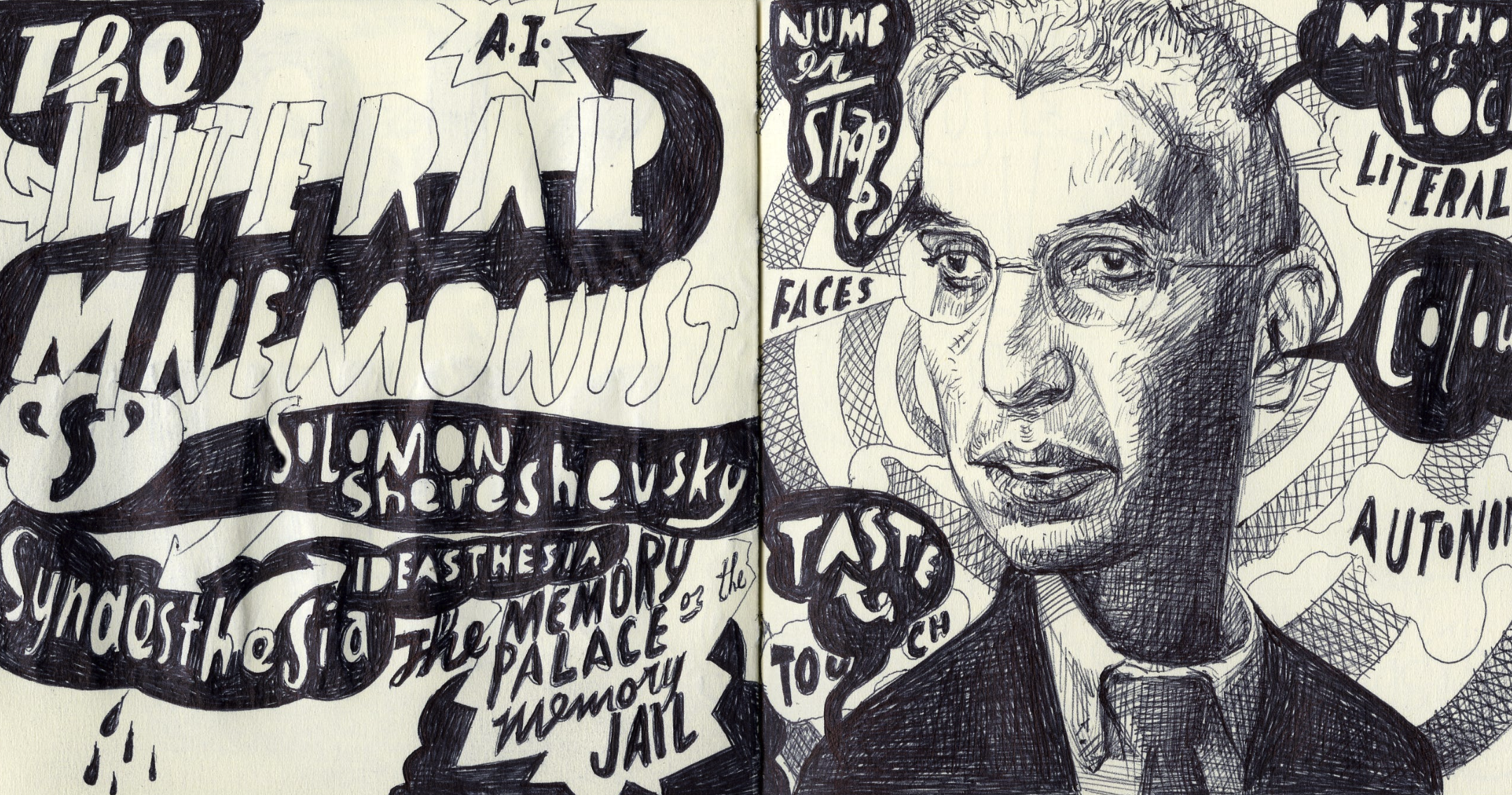
The Man Who Couldn't Forget
Solomon Shereshevsky was a Russian journalist in the 1920s who could remember literally everything. Lists, conversations, random numbers from decades prior. Sounds like a superpower, right? Except he couldn't hold down a job, struggled to understand metaphors, and found abstract thinking nearly impossible. His perfect memory made him worse at actually thinking. His brain was so full of trees, he'd never seen a forest in his life. The New Yorker has the full story.
The Robots That Need to Forget
AI researchers discovered that neural networks have a problem called "catastrophic forgetting". When they learn something new, they completely obliterate old knowledge. The irony is they're trying to add forgetting mechanisms to make AI smarter because it turns out, biological brains figured this out millions of years ago. Your leaky memory is cutting-edge technology. IBM explains the phenomenon here.
Borges Called It First
In 1942, Jorge Luis Borges wrote "Funes the Memorious," a short story about a man who remembers absolutely everything after a head injury. It's a horror story. Funes can't generalize, can't sleep, can't think beyond the specific. He dies at 21, crushed by the weight of total recall. Borges understood what neuroscience would later confirm. Perfect memory is a curse dressed up as a gift. The Wikipedia entry covers it well.
What Does Science Say?
The big paper here is from Blake Richards and Paul Frankland at the University of Toronto, published in the journal Neuron in 2017. Their argument was the brain has two competing goals, persistence (remembering) and transience (forgetting), and both are essential. Forgetting helps you generalize from past experiences rather than getting stuck on irrelevant details. U of T has a readable summary.
Meanwhile, sleep researchers have found that your brain actively prunes memories while you sleep, keeping the gist and discarding the noise. Your nightly forgetting session is basically Marie Kondo for your neurons. The full study is here if you want the details.
Dumb Word of the Day
Lethe (LEE-thee) n. — In Greek mythology, Lethe was the river of forgetfulness that flowed through the underworld. When the dead arrived in Hades, they were supposed to drink from the Lethe so they'd forget their entire earthly life. Complete memory wipe. Factory reset for the soul.
By extension, Lethe has come to mean oblivion or forgetfulness itself. It comes from the Greek word lēthē, meaning "forgetfulness" or "concealment." And here's a fun little etymology bonus: the word for truth in Greek is aletheia, which literally means "un-forgetting" or "un-concealment." So the Greeks baked into their language the idea that truth and forgetting are opposites. Which, after everything we've talked about today, might be exactly backward.
Because if Richards and Frankland are right, forgetting doesn't take you further from the truth. It gets you closer to it. It strips away the noise so you can see the signal. Shereshevsky had all the facts and none of the truth. The rest of us drink from the Lethe every night and wake up wiser.
Let's use it in a sentence: "I'm not getting old, I'm just drinking more deeply from the Lethe these days. Very spiritual of me, really."

Today, practice intentional forgetting. Pick one thing you've been holding onto (an old grudge, an embarrassing moment, someone's offhand comment from 2019) and consciously decide to let your brain delete it. You don't have to forgive it or process it or journal about it. Just stop refreshing the memory. Let it decay. Your brain wants to take out this trash. You just keep bringing it back inside.
Bonus: If you forget what the thing was by tomorrow, congratulations! That's your brain doing its job.
Thanks for getting dumb with me today.
Remember, forgetting this newsletter is a sign of intelligence. But subscribing first? That's wisdom.
David 🎉