Why We Love a Lonely Monkey More Than Each Other


Listen to the Dumbify Podcast on Spotify or Apple.
👋 Hey dumdums,
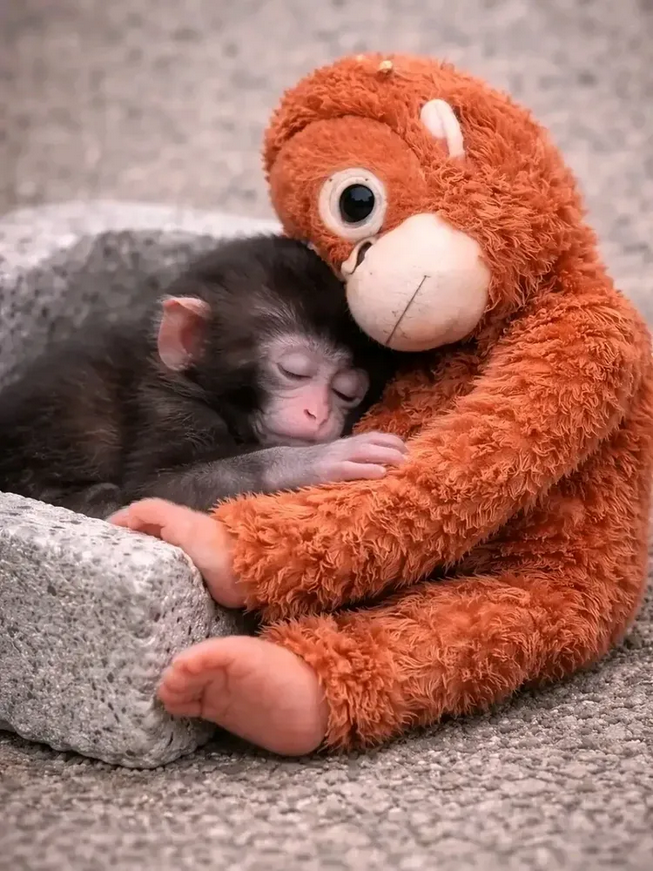
I spent forty minutes this week watching a baby monkey drag a stuffed orangutan around a zoo enclosure in Japan. Not a highlight reel. The whole thing. Multiple times. At one point I said "you got this, little guy" out loud, alone in my living room, like he could hear me through the screen.
His name is Punch. His mother rejected him the day he was born. Wouldn't hold him, wouldn't feed him, wouldn't look at him. So the zookeepers did what anyone would do for a newborn who'd been abandoned. They gave him something soft to hold onto. An IKEA plush orangutan. Twenty bucks. And Punch clung to it like it was the only thing in the world that wanted him back.
The videos of him dragging that toy everywhere went so viral the zoo jumped from a quiet local spot to 6,000 visitors a day. The plush has completely sold out at IKEA and is now reselling for $350 on eBay.
Meanwhile, there are 6,000 GoFundMes for cancer treatment live right now. How many times have you checked on one this week? Have you whispered encouragement at your phone for a stranger's chemo updates? Be honest.
The Dumb Lens
We're not heartless. We're actually too sensitive to handle real empathy, so we outsource it to animals.
Punch gives us everything we crave from a redemption story with none of the complications. He was rejected. He struggled. He found comfort. He's slowly being accepted by his troop. Beginning, middle, hopeful end. No ambiguity. No politics. No questions about whether he deserves help or tried hard enough or has the right paperwork.
Humans are messy. They disappoint us. They have opinions we disagree with. They remind us of our own failures. But a baby monkey clinging to a stuffed orangutan? Pure. Uncomplicated. Safe.
❝ We don't love animal stories because we're empathetic. We love them because empathy for animals costs us nothing. ❞
It's not that we care more about animals than people. It's that caring about animals is easier than caring about people. And we've confused easy with good.
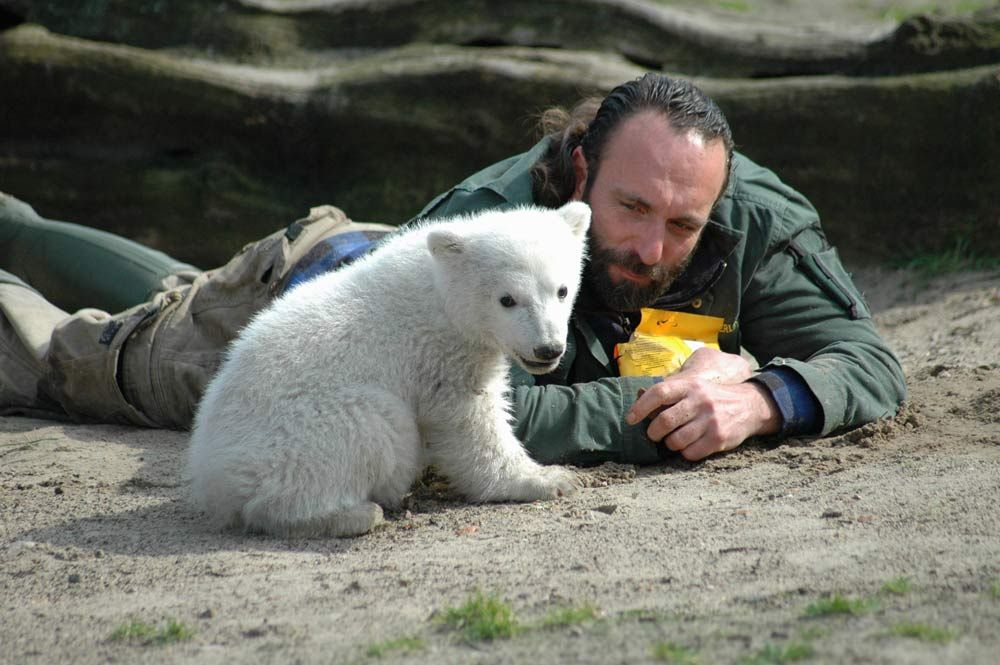
Knut Made Berlin Zoo's Best Year in 163 Years
In 2006, a polar bear cub in Berlin was rejected by his mother. Zookeepers hand-raised him, named him Knut, and watched him become the most famous animal on Earth. Vanity Fair put him on the cover with Leonardo DiCaprio. Attendance doubled. The zoo made an estimated €5 million in extra revenue, its most profitable year in over a century and a half. People flew from other continents to see a bear who had no idea why everyone was crying. Wikipedia has the full absurd timeline.
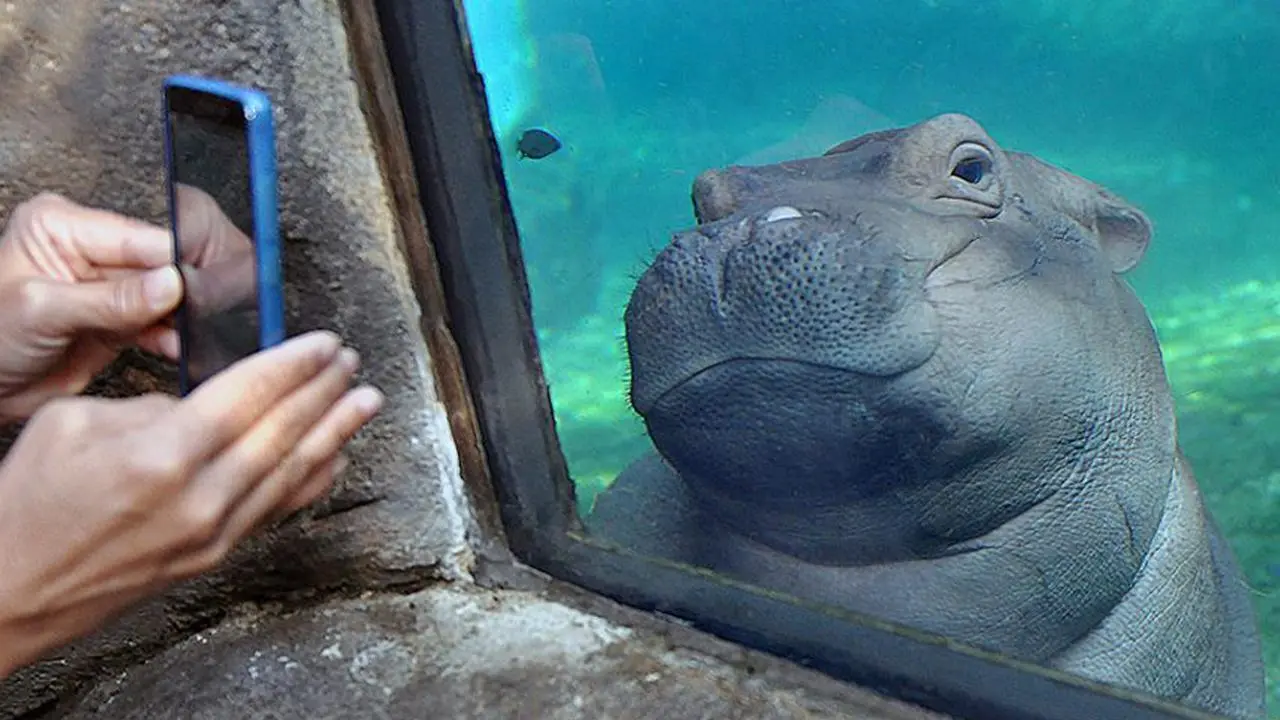
Fiona the Hippo Generated Millions for Cincinnati
In 2017, a premature hippo was born at Cincinnati Zoo weighing just 29 pounds. She wasn't expected to survive. Zookeepers nursed her around the clock, posted updates online, and accidentally created a phenomenon. Within a year, Fiona had her own beer, her own ice cream, her own merchandise empire. The zoo saw a 22% attendance spike. NPR estimates she generated $2 to $3 million for the local economy. All because people needed to know if one small hippo would be okay. NPR covered her first birthday.
Harrison's Fund Ran the Cruelest Experiment
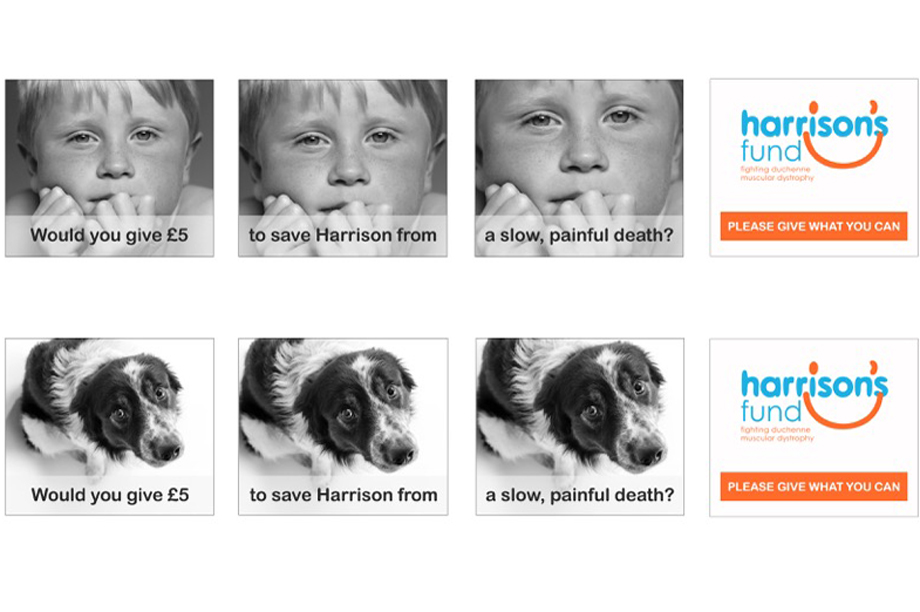
A UK medical charity called Harrison's Fund wanted to test something uncomfortable. They created two fake campaigns with identical copy, one showing a suffering dog, one showing a suffering human. The dog won. Not by a little. People were measurably, significantly more likely to open their wallets for a canine than for their own species. The finding was so depressing that it became a news story about how messed up we are. The Independent covered the study.
What Does Science Say?
Psychologists have a term for why we sob over Punch but scroll past statistics. The "identifiable victim effect." University of Pennsylvania researcher Deborah Small found that people donate significantly more to a single, specific person with a name and a face than to "statistical victims." One starving child with a photo gets more than a million anonymous ones. Punch is the identifiable victim effect on steroids. He has a name, a face, a stuffed orangutan, and zero capacity to ever post a bad take on social media. This 2023 study revisits Small's original findings.
There's also "compassion fade." Psychologist Paul Slovic found that our empathy doesn't just plateau as victims multiply. It actually drops. In one study, compassion started declining the moment the number of people in need went from one to two. A million refugees become a statistic. One monkey with a plush toy becomes a movement. Vox has a good explainer on Slovic's work.
And here's the part that should worry us. Researchers at the University of British Columbia found that when people publicly show token support for a cause, like sharing a post or signing a petition, they're actually less likely to give real help afterward. The public display satisfies their need to feel good about themselves, so they're done. Watching Punch videos and telling your friends about him might literally be making you less likely to help actual humans. The study on slacktivism is here.
Dumb Word of the Day
cathexis (kuh-THEK-sis) n. The investment of emotional energy in a person, object, or idea. From psychoanalysis. Basically what happens when you care way too much about something that cannot care back.
Let's use it in a sentence: My cathexis toward a Japanese monkey I will never meet has reached levels that should concern my therapist.

This week, find one human being you've been unconsciously avoiding helping and actually help them. Not a charity. Not a cause. A specific person you know who needs something you could give. Your friend who keeps asking you to read their manuscript. Your coworker who mentioned they're struggling with childcare. Your neighbor with the GoFundMe you've scrolled past eleven times.
It'll be harder than watching a monkey video. That's sort of the point.
Thank you for getting dumb with me today.
May your empathy be as unconditional as it is for a small primate who will never disappoint you.
David 🎉