Why Giving Your Secret Sauce Away Is the Secret Sauce


Listen to the Dumbify Podcast on Spotify or Apple.
👋 Hey dumdums,
It's 1980, and a guy in a Chinatown parking lot is loading recycled baby food jars into a blue Chevy van. Each jar is full of bright red paste that smells like someone set a garlic farm on fire in the most delicious way possible.
He doesn't speak much English. He has no money. He has no business plan.
What he does have is a recipe he carried in his head across an ocean from a country he could never go back to. The year before, David Tran had fled communist Vietnam on a Taiwanese freight ship called the Huy Fong—which translates to "gathering prosperity," the kind of boat name that either means you're going to get very lucky or the universe is messing with you.
Within a few years, lawyers start circling. IP attorneys. Trademark specialists. The kind of people who wear ties to places that don't require ties. They all deliver the same speech:
David, you need to trademark the word sriracha. You need to protect your invention. If you don't, someone else is just going to steal it.
And David Tran, the man with the van, looks at these very expensive professionals and says, essentially, "Nope."
The Dumb Lens
Today's dumb idea is simple. Give your best stuff away for free.
Not your secondhand stuff. Not the thing you don't want anymore. Your best stuff—the thing you spent years creating, the thing that makes you money, the thing your lawyers literally beg you to protect.
Just hand it all out at Costco. Let everyone copy it. Watch competitors clone your work and sell it under their own name.
Then do absolutely nothing about it.
Every IP attorney in America probably just threw their phone across the room. Every MBA professor just felt a disturbance in the Force.
Everything we've been taught about business says the same thing: protect your intellectual property, build a moat, guard the recipe. The Coca-Cola formula is in a literal vault. KFC's eleven herbs and spices are split between two different suppliers so nobody has the whole recipe.
We've built an entire economy around the idea that your secret is your advantage.
And yet.
I'm about to tell you three stories about people who gave away their most valuable thing. One of them built a billion-dollar hot sauce empire. One of them saved over a million human lives. And one of them became the highest-grossing American touring act of the 1990s with exactly one Top 40 hit to their name.
Every single one of them was told by credentialed professionals that they were making a catastrophic mistake.
They gave it away anyway.
The Rooster, The Recipe, and the $0 Marketing Budget
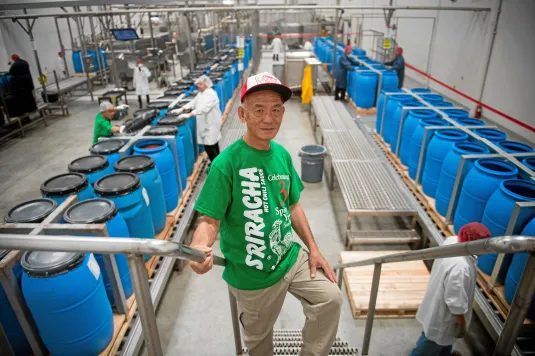
By the mid-1980s, David Tran's baby jars were gone, replaced by that now-iconic red bottle with the green cap and the rooster logo. (The rooster is there because Tran was born in the year of the rooster in the Vietnamese zodiac. Not a marketing decision—just a guy putting his birth year on his sauce. Try explaining that to a brand consultant.)
The lawyers kept circling. "David, the word sriracha—you need to own it. If you don't, someone else will use it, and then you're done."
David Tran kept saying no.
Here's what makes this bonkers: His attorneys believed he could have built a case early on—before it became genericized—to own that name. He just chose not to. What he did trademark was the rooster, the green cap, and the bottle design. But the name and the recipe? Wide open.
Come and get it.
And they came. Oh man, they came. Heinz made a sriracha. Tabasco made a sriracha. Taco Bell, Pizza Hut, Subway—all making sriracha products. The name exploded across the entire food industry.
None of them paid David Tran a single cent.
His attorney, a guy named Rod Berman who represented the Lakers, Nordstrom, and Pom Wonderful, told The Seattle Times his instinct was to go after every single one of them. "But that's not realistic," he said, "especially for a medium-sized company like Huy Fong."
But here's what gets me. Tran wasn't upset about any of this. Not even a little.
He even has a daily ritual. Every morning, he searches the internet for the latest sriracha spinoff. Not to get angry. Not to build a lawsuit. He searches because he's proud. He sees every imitator as free advertising for a company that has never—not once in over forty years—spent a single dollar on marketing.
No marketing budget. No sales team. No Super Bowl ad with a celebrity squirting hot sauce.
Today, Huy Fong runs out of a 650,000-square-foot factory in Irwindale, California. David Tran owns 100% of it. No investors. No board of directors. A billion-dollar brand built by a refugee who sold chili paste out of baby jars in a parking lot—and then let the entire world steal his homework.
He even signs licensing deals where he charges zero royalties. A brewery called Rogue made a sriracha hot stout beer. A company called Pop Gourmet made sriracha popcorn. Tran's only condition? "Use the real sauce and stay true to the flavor."
That's it. No money. Just use the real stuff.
And despite Heinz, Tabasco, and every supermarket house brand making their own version—when most Americans hear the word sriracha, they still think of one thing: that rooster bottle with the green cap.
He gave away the name. But he got to keep the legend.
Read more about Tran's anti-trademark philosophy in the LA Times.
The Seatbelt That Could Have Been Worth Billions
David Tran isn't even the most dramatic version of this story. For that, we need to go to Sweden. And the stakes go from money to actual human lives.
In 1958, Volvo CEO Gunnar Engellau had just lost a relative in a car crash. At this point, the only seat belts available were two-point lap belts that strapped across your waist. In high-speed crashes, these things were actually dangerous—known to cause severe internal injuries because all the force concentrated on your abdomen.
A device that crushes your organs during the moment it's supposed to save your life. Cool.
So Engellau makes a hire that sounds almost comically on the nose. He recruits Nils Bohlin, a Swedish engineer who'd been designing ejector seats for fighter jets at Saab. If anyone knows how to keep a human body alive during sudden deceleration, it's the guy who's been launching pilots out of aircraft.
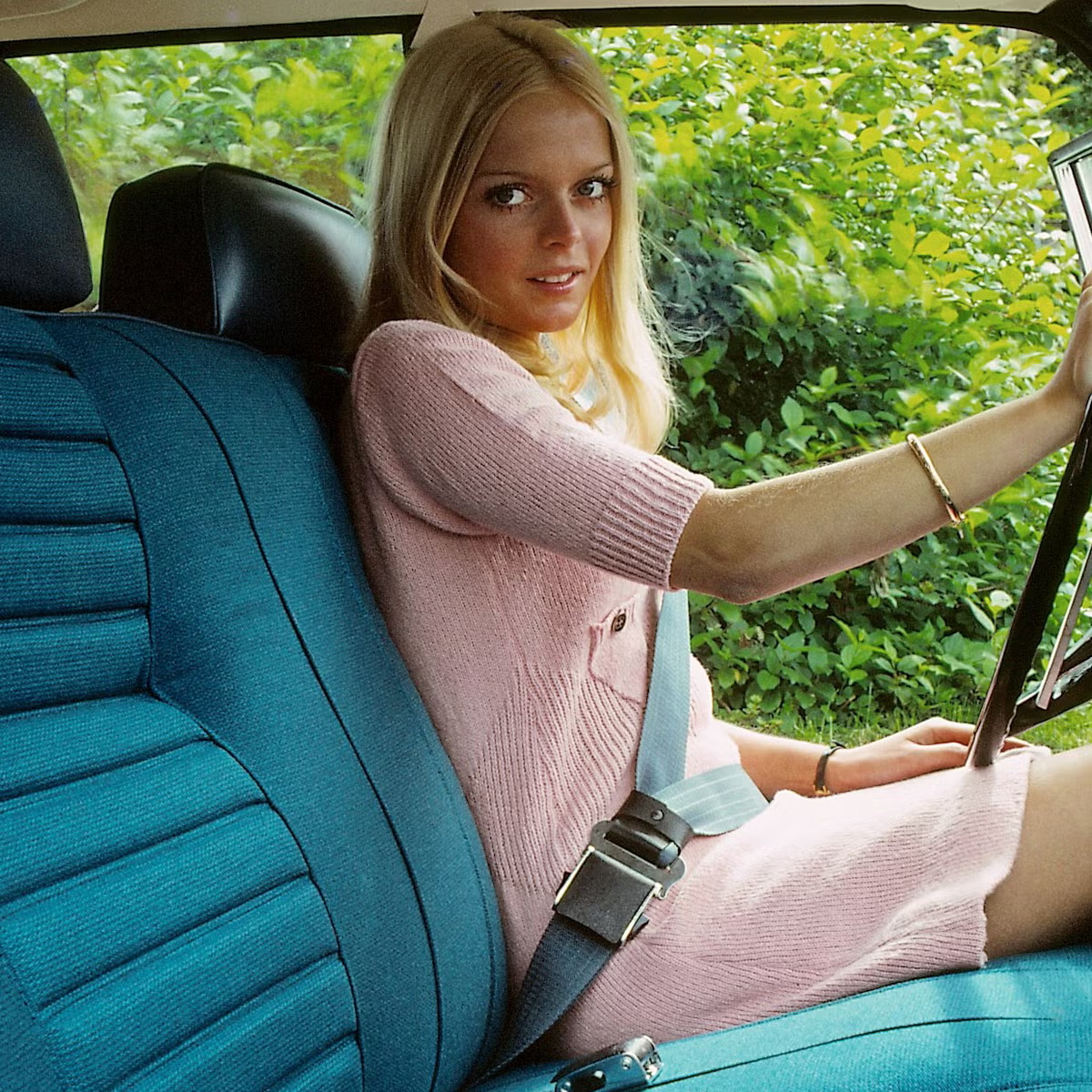
Bohlin takes less than a year. He designs the three-point seat belt—the one that goes across your chest and lap. The one in literally every vehicle on Earth. The one you're wearing right now if you're in a car.
He later told The New York Times: "It was just a matter of finding a solution that was simple, effective, and could be put on conveniently with just one hand." You know, just a matter—like he was choosing a sandwich.
On August 13th, 1959, Volvo delivers the first car fitted with Bohlin's three-point belt to a dealer in Sweden. Volvo patents the design.
And then they do something completely unheard of in the automotive industry.
They open the patent to everyone. For free.
Any car manufacturer on Earth could use Nils Bohlin's three-point seat belt without paying Volvo a single krona. Ford. GM. Toyota. Mercedes. Everyone. No licensing fee, no royalty, not even negotiation.
Just take it.
Can you imagine the scene in that boardroom? Some finance person with a calculator and a blood pressure problem trying to explain what they're giving away. Every car in the world is going to need seatbelts. Every single one, for the rest of automotive history. The royalties on that patent alone could have been worth billions.
And Volvo just hands it over.
The German Patent Office ranked Bohlin's three-point seat belt as one of the eight most important patents for humanity since 1885. Over one million lives saved worldwide. In the United States alone, seatbelts save more than 11,000 lives every year.
Here's the Dumbify twist. The part that would make a business school professor's eye twitch:
Volvo gave away the seat belt. And in doing so, they became the permanent, irrevocable, unshakable global synonym for safety.
Every other car company obviously uses the seat belt. But when you ask anyone on the planet which car brand is the safest, they say Volvo. They've said it for sixty-five years.
Volvo gave away the invention. But they kept the identity.
Volvo's own account of giving away the patent.
The Band That Made Bootleggers VIPs
Here's the third story, and it's my favorite—because it involves a band that made exactly one song the average person can hum and somehow out-earned Bruce Springsteen, Madonna, and Michael Jackson.
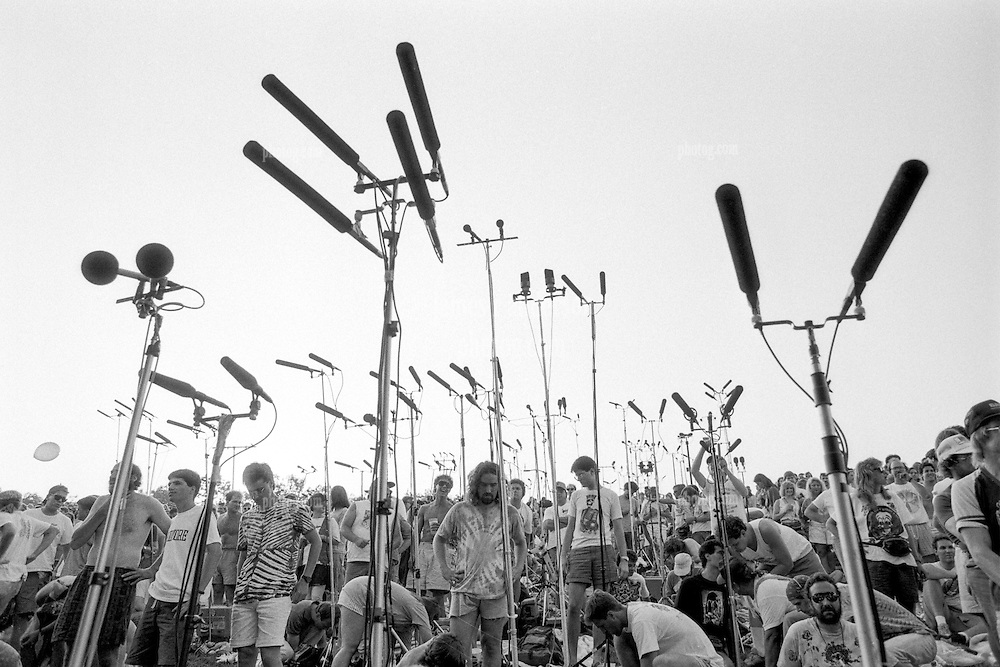
In the early 1970s, fans of the Grateful Dead started doing something that would make any record label executive need a stiff drink. They started bringing recording equipment to concerts. Tape decks. Microphones. Stands. Full rigs. They'd set up in the audience like tiny bootleg recording studios and tape the entire show. Then they'd go home, make copies, and mail them out to other Deadheads around the country.
Every other band dealt with this the same way—lawyers, security guards, and signs at the door: "Recording and photography of tonight's performance is strictly prohibited."
Music industry orthodoxy was clear: If you let fans record your concerts, they won't buy your albums. You are literally giving away your product.
The Grateful Dead had a meeting about this. Drummer Mickey Hart described it later: "We had the choice of either taking their machines away from them, putting them somewhere, and giving them a ticket to reclaim them afterwards… It became a real hassle. So it was either that or let them tape."
This is the fork in the road. Every advisor, every professional, every person with a business degree would say: Shut it down. Protect your product. Stop the bleeding.
But the Grateful Dead said—and I want you to hear this in the most California hippie voice you can imagine—"We can't be cops. We're the Grateful Dead, you know? We can't stop them from doing anything as long as they're not hurting anybody."
So instead of banning the tapers, they created a taper section. A designated area behind the soundboard with the best acoustics in the house. They gave bootleggers VIP seats. They occasionally let tapers plug directly into the mixing board.
Before their 1975 hiatus, fans were sneaking equipment into shows by stuffing entire microphone stands down their pant legs and claiming to be disabled. That's how much people wanted to record these concerts. And the Dead just looked at that energy and instead of fighting it said, "Here, have better seats."
The only rule: Don't sell the tapes for profit. Trade them, share them, give them away.
What happened? Exactly what every industry professional said wouldn't happen.
While the band was on hiatus in 1975, tape trading exploded. One guy who started college that year with five Dead tapes graduated with almost a thousand. When the band came back to touring in 1976, their fan base had grown—during a year they didn't play a single concert. The tapes had done all the work.
The Grateful Dead had exactly one Top 40 hit in their entire thirty-year career. "Touch of Grey," 1987. Most of their studio albums weren't huge sellers. Warner Brothers was openly baffled about how to market them.
But in the 1990s alone, the Grateful Dead generated $285 million in touring revenue. That made them the highest-grossing American touring act of the decade, second worldwide only behind The Rolling Stones. And Jerry Garcia died in 1995—so they accomplished this in basically half a decade.
They played to an estimated 25 million people total, more than any other band in history.
Jerry Garcia once said: "We didn't really invent the Grateful Dead. The crowd invented the Grateful Dead."
Which is true. And the crowd couldn't have invented it without the tapes.
The Grateful Dead gave away the music. They kept the audience.
The New York Times on the Dead's taper culture.
The Science: Peacock Tails and Expensive Gifts
Why does this work? Why does giving stuff away make you more powerful instead of less?
In 2006, researchers Charlie Hardy and Mark Van Vugt at the University of Kent published a study with one of the all-time great academic paper titles: "Nice Guys Finish First: The Competitive Altruism Hypothesis."
They ran experiments where groups of people faced social dilemmas—situations where you could either help yourself or help the group. In a reputation environment where people could see who was giving what, people became significantly more generous.
That's not surprising. What's surprising is what happened next.
The most generous members consistently gained the highest social status. They were most frequently chosen as partners for future interactions. And here's the kicker: As the cost of the altruism increased, the status rewards also increased.
The more you gave away, the more people trusted you. The more expensive the gift, the more powerful the signal.
This is what biologists call costly signaling theory. Israeli biologist Amotz Zahavi proposed it in 1975. The idea is beautifully counterintuitive:
When an animal does something that appears to hurt its own chances of survival, that act itself becomes proof that the animal is strong enough to afford it.
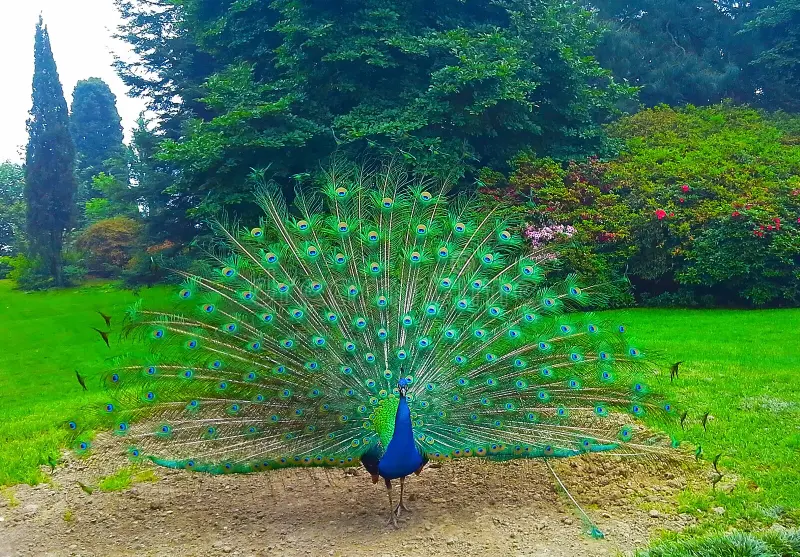
The peacock's tail. It's absurdly impractical—makes the bird slower, more visible to predators, hard to maneuver. But that's the point. Only a really strong peacock can afford to lug around that ridiculous tail.
The tail isn't a weakness. It's a flex.
David Tran letting everyone copy his sauce? Peacock tail.
Volvo giving away the seatbelt patent? Peacock tail.
The Grateful Dead saying "record our shows, we don't care"? Giant, gorgeous, iridescent peacock tail.
The costly signal says: I am so confident in what I make that I can afford to give it away. I'm not afraid of copycats because my original is better. I'm not afraid of competition because I know who I am.
The instinct to hoard, to protect, to build walls around our best ideas—it feels like strength. But the research says it's actually fear disguised as strategy.
The people who gave it away? They were the ones playing offense.
Dumb Word of the Day
Potlatch (POT-latch) noun
A ceremonial feast practiced by Indigenous peoples of the Pacific Northwest Coast, where a host gains social status not by accumulating wealth, but by giving it away. The more extravagantly you gave, the higher your status rose. It was so counterintuitive to European colonizers that both the Canadian and U.S. governments actually banned potlatches in the late 1800s. They literally made generosity illegal because it confused their economic model.
Let's use it in a sentence: My neighbor Todd claims his annual Fourth of July barbecue is basically a potlatch because he buys the expensive hot dogs, but I'm pretty sure actual potlatch culture involved slightly higher stakes than Hebrew National versus Oscar Mayer.

This Week's Challenge: The Potlatch Play
Three simple steps.
Step one: Identify the thing you guard most closely. Maybe it's your recipe. Your killer template at work. A secret shortcut. The thing that gives you your edge. The thing you would never, ever share because someone might steal it.
Step two: Give it away to one person. Share it openly, freely, with no strings attached. Post it online. Email it to a colleague. Just tell someone how you actually do the thing you do.
Step three: Watch what happens. Pay attention to how people respond when you share something valuable without asking for anything in return. Does the relationship change? Do they come to you with more opportunities? Do you feel diminished—or does it make you feel like you've just proven to yourself and everyone else that you're the one who can afford to be generous?
Bonus points if the thing you share is something that makes you nervous to share. That's the costly signal. That's the peacock tail. The nervousness means it's expensive enough to actually count.
Thanks for getting dumb with me today.
Remember, the people who hoarded everything ended up with nothing. And the people who gave away everything? They ended up with the whole rooster.
David 🎉